
A snowplow attachment looks impressive sitting in front of a side-by-side. But once a heavy storm arrives, the real test isn’t how much snow the blade can push. It’s whether the vehicle can maintain enough traction to keep working.
Anyone who has tried clearing a long rural driveway knows the frustration. The first pass goes smoothly. Then the snow gets deeper, the tires begin spinning, and the machine struggles to push another load. A powerful engine doesn’t solve every traction problem. Sometimes the limitation is the surface beneath the vehicle.
Snow Removal Begins With Staying Mobile
A conventional tire concentrates the machine’s weight into a relatively small area. On soft snow, that pressure can cause the vehicle to sink, increasing the resistance it must overcome.
UTV tracks distribute the weight across a much larger footprint. This can improve flotation and help the machine maintain movement in conditions where tires struggle.
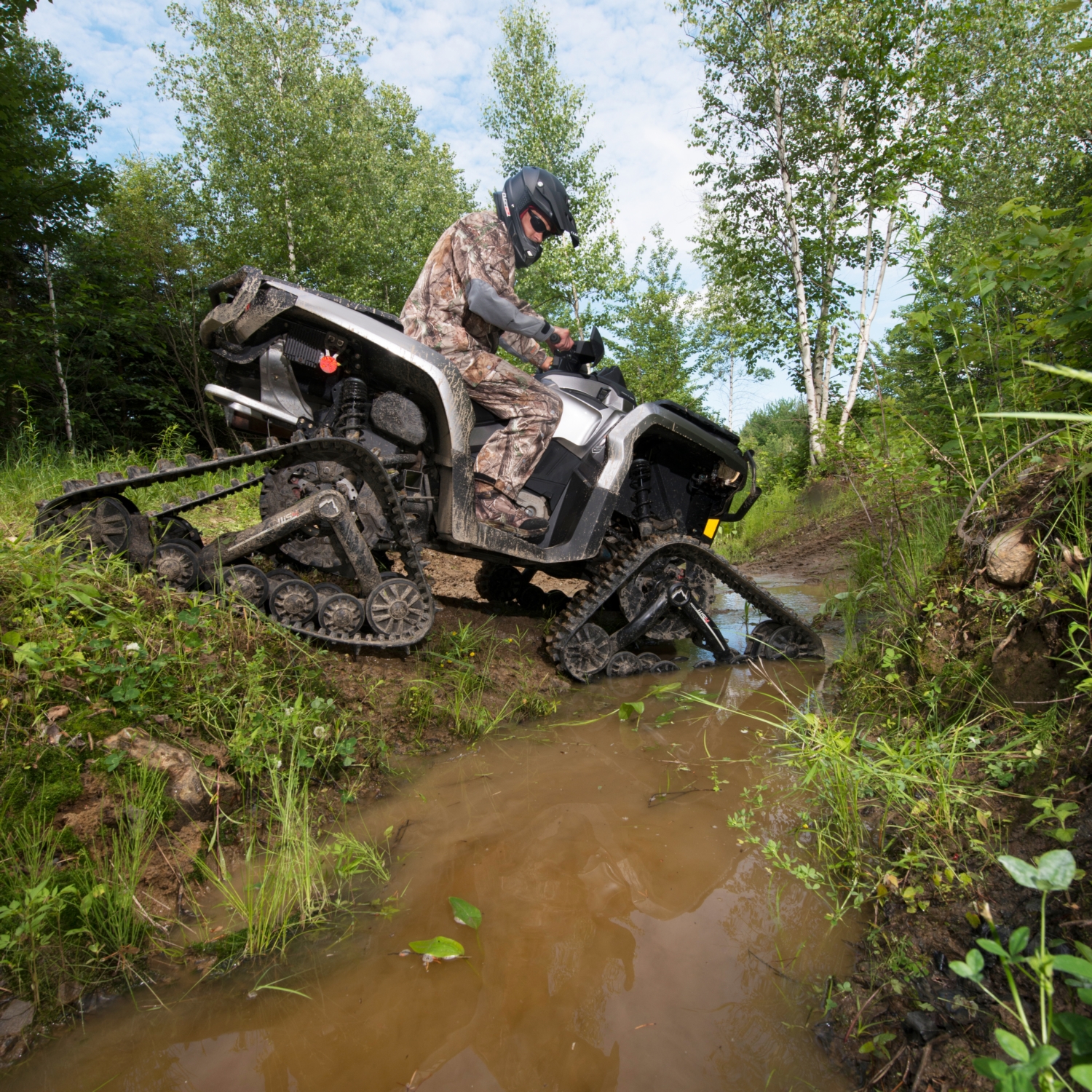
For property owners using snow-clearing attachments, that additional mobility can be valuable. However, tracks don’t automatically increase the vehicle’s rated pushing capacity. Blade width, snow density, vehicle weight, available traction, and drivetrain limitations still determine what the machine can reasonably handle.
Wet, compacted snow is particularly demanding because it can weigh considerably more than light powder.
The Blade and the Tracks Need to Work Together
Installing a track system changes the vehicle’s operating characteristics. The additional rotating weight and resistance generally reduce travel speed, while the machine may require more fuel to complete the same distance.
That’s not necessarily a disadvantage when clearing snow. Controlled, low-speed movement is often more useful than traveling quickly.
Still, owners should confirm that their plow attachment, mounting hardware, and track assemblies are compatible. Some accessories may require adjustments or different mounting arrangements after a track conversion.
ATVTracks.net supplies UTV track systems alongside snow plows, snow blowers, installation kits, and related accessories.
That makes it possible to consider the vehicle’s winter equipment as a complete setup rather than treating each attachment as an unrelated purchase.
Why the First Pass Matters
Picture a driveway with twelve inches of fresh snow. Trying to push the entire accumulation in one aggressive pass may overload the machine or cause it to lose traction.
A more controlled approach is to work within the equipment manufacturer’s recommendations, reducing the amount of snow being pushed when necessary.
Snow should also be moved to locations that won’t block drainage, create visibility problems, or interfere with later clearing. Repeatedly piling snow in the wrong place can turn a manageable driveway into a difficult obstacle after several storms.
Match the Track System to the Machine
Not all tracks for UTVs are intended for identical applications. ATVTracks.net carries four systems from Camso and Kimpex, with different vehicle requirements and operating characteristics.
The correct selection depends on the side-by-side’s make, model, year, weight, and intended workload. Owners should verify compatibility before purchasing side by side tracks, particularly when the machine already carries plowing equipment.
Winter Work Rewards Preparation
Side by side track systems can help extend a UTV’s usefulness during demanding winter conditions, but they don’t replace sensible operating practices.
Inspect the blade, check mounting hardware, follow low-range recommendations, and avoid pushing beyond the vehicle’s rated capabilities.
For someone responsible for a long driveway, private road, or rural property, dependable traction can make snow removal more manageable. The important question isn’t simply whether the machine can push snow. It’s whether the entire setup can handle the job repeatedly, without unnecessary strain or damage.