
In any professional kitchen the floor is much more than supporting equipment and foot traffic it plays a significant role in safety, sanitation, and long-term operation success. It is vital to select the correct commercial flooring, as it can have a direct effect on hygiene standards, employees safety, and regulatory compliance. In highly-demand settings in which heat, spills and high usage are a constant and frequent, flooring alternatives such as tile often fall short. Businesses in the area are switching to seamless flooring systems that work better, specially designed for food service environments.
High Performance Systems has been a trusted name in advanced flooring solutions since 1988, delivering robust, non-porous floors that eliminate common issues like cracking grout lines, and bacterial buildup. Their expertise in commercial kitchen flooring NJ ensures that restaurants food processing facilities, and commercial kitchens are provided with solutions designed to meet the real-world demands.
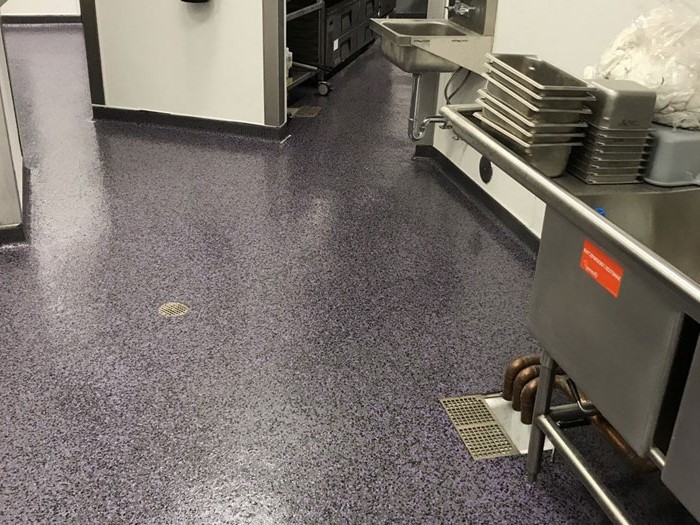
Why does Seamless Flooring outperform traditional tile
The traditional tile flooring might seem like a standard choice, but it has hidden issues as time passes. Grout lines take in water, hold food particles, and create the perfect breeding ground for bacteria. Seamless epoxy and urethane solutions are, on the other hand provide a non-porous continuous surface that is easy to clean and clean.
It is vital to understand that this is the case for establishments that are required to meet strict food safety standards. With USDA commercial kitchen flooring, hygiene is a top priority. The seamless flooring minimizes the chance of contamination and helps to adhere to strict cleaning protocols. The result is safer working conditions for employees and a better environment for food preparation.
Additionally, floors that are seamless are also more robust. The weight of equipment, the constant pedestrian traffic, and regular cleaning cycles could quickly ruin traditional flooring. Epoxy-urethane surface resists chemical exposure, impacts, and the abrasion. This ensures long-term performance.
Built to withstand the most extreme conditions
Commercial kitchens can be tough areas for flooring. Temperature fluctuations in ovens, fryers, and freezers can cause conventional materials to break or become damaged. Urethane cement flooring is, however, engineered to withstand thermal shocks by contracting and expanding according to temperature variations.
This durability makes it a top choice for SQF commercial kitchen flooring in which durability and conformity are crucial. The use of slip-resistant flooring increase safety in the workplace and lowers the possibility of accidents, particularly in kitchens with a lot of traffic. These modern systems offer stability and traction, even when working with grease or water.
One of the primary benefits of wood flooring is that it can endure high-temperature washing. Specialized flooring materials can stand up to this type of stress. Kitchens require regular deep-cleaning with heated water, chemical sludge and other cleaning agents. High-performance coatings will ensure that the surface remains intact, hygienic, and visually appealing over time.
Faster Installation, Minimal Downtime
One of the biggest challenges when updating kitchen flooring is the disruption in operation. A kitchen that is closed for several days or weeks can lead to significant revenue loss. The reason for this is that modern flooring systems are made for rapid installation and quick curing times.
High Performance Systems has a specialization in projects that are able to be completed quickly, so companies can resume normal operation within the shortest amount of time. The majority of the time, urethane-cement flooring systems can be positioned directly on existing flooring. This helps reduce the cost of demolition, and accelerates the process of installation. This efficiencies makes upgrading to advanced commercial kitchen flooring NJ a practical investment rather than a logistical burden.
Installations can be done quickly and without compromising quality. This is an enormous benefit for food production facilities and restaurants. This ensures that kitchens are operating and efficient without compromising productivity.
Cost savings and value in the long-term
While the initial cost for high-performance flooring is higher than other options, it’s long-term advantages outweigh this expense. They are simpler to keep clean, require less frequent cleaning, and reduce the need to replace or repair. These floors last significantly longer because they do away with grout lines as well as weak areas.
Better safety features help to reduce workplace accidents and the related liability costs. Improved hygiene also leads to better performance in inspections. This is crucial for maintaining certifications and customer trust.
Companies looking for solid, durable, and compliant solutions should consider investing in USDA or SQF commercial floor kitchens. It will guarantee that their activities are compliant, while also maximizing efficiency.
Modern Food Service Facilities The Best Choice
Commercial kitchens today require more than the basic flooring. They need systems that increase safety, improve compliance, and can withstand continuous use. Modern kitchens require solutions that ensure the durability, hygiene, and performance.
High Performance Systems has been at the forefront of ingenuous flooring options for a number of years. They offer functionality as well as longevity. Consider commercial flooring that is advanced for your kitchen, whether you’re remodeling an existing building or building a new one completely from scratch. It’s a smart choice that will increase security and efficiency and peace of mind.